Help us improve this website with a quick survey. Click Here
Live life in focus with the EVO ICL

Looking for a procedure that could give you the freedom to see the world without the hassles of glasses and contact lenses? Consider the EVO ICL (EVO).
With the EVO ICL, many patients get sharp, clear vision. Taking the plunge to go forth with an eye procedure can be scary, but thinking about the benefits of life after the procedure can help.
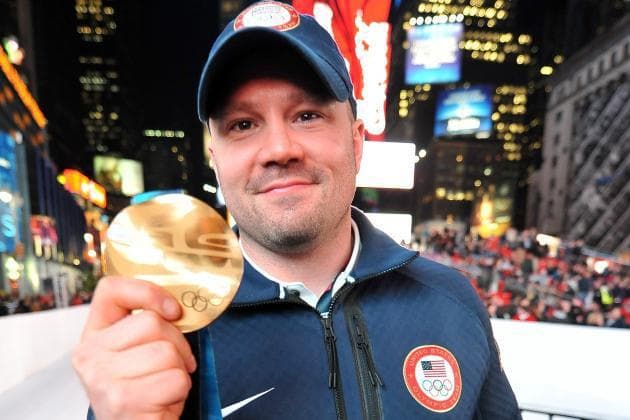
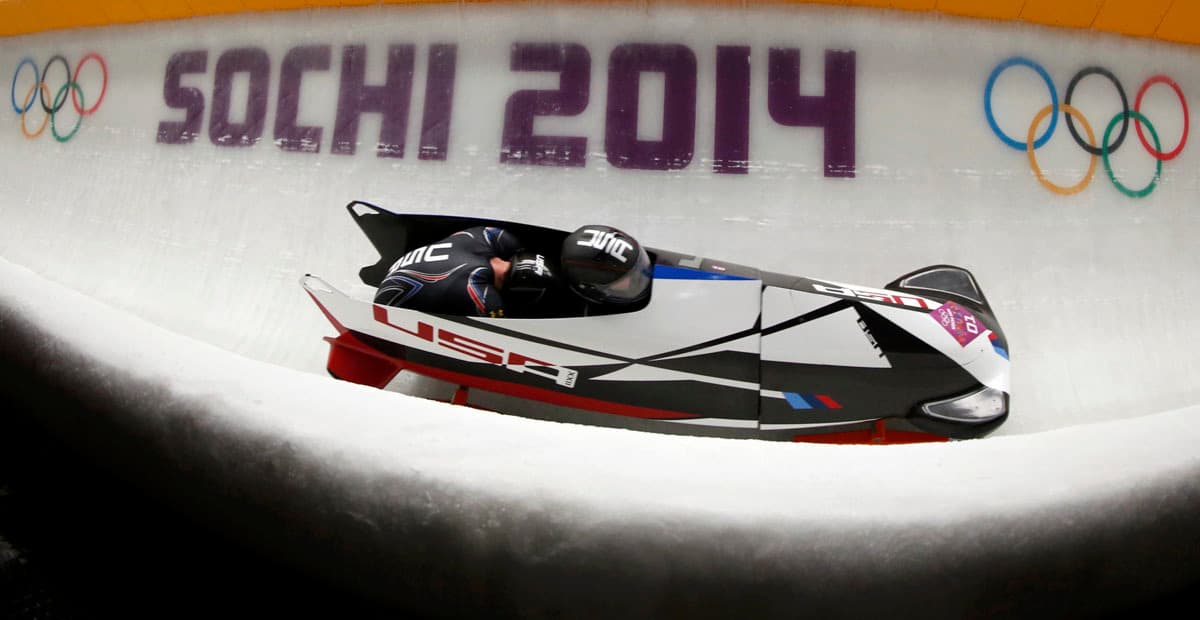
A great example is the story of Steve Holcomb. If his name sounds familiar, it’s because he led the U.S. men’s 4-man bobsled team to victory in the 2010 winter games in Vancouver and again in the 2014 Sochi games. But what you might not know is Holcomb almost gave up bobsledding completely because of a condition that was gradually causing him to go blind. His vision had become so poor that he could no longer see well enough on the bobsled track, and he felt he was a danger to his teammates and himself.
Holcomb had all but given up on his bobsled career—and life—until he learned about the life-changing ICL lens. In 2008, he had the ICL procedure and almost immediately he was able to see clearly at 20/20. With his vision so drastically improved (before the procedure he was 20/500!), he was back in his bobsled with a new lease on his game and on his life.
After the ICL procedure, Holcomb led the U.S. men’s bobsled team to win the 2010 4-man World Championship. From there, things just kept going up for Holcomb. At the 2010 Vancouver games, he led his team to win the United States’ first Olympic gold in bobsled in 62 years. And because that wasn’t enough, he and his team went on to win Olympic bronze at the 2014 Sochi games.
For Holcomb, the effect of the ICL lens was priceless. He went from being a man who could barely see with a bleak outlook on life to a man standing tall on the podium beaming with pride and an Olympic gold medal around his neck. Without the ICL lens, he may never have made it back into the bobsled, and his dreams of Olympic victory would likely never have become a reality.
While not everyone is an Olympic bobsledder, you might be able to imagine how the EVO ICL could change your life, too. If you’ve always dreamed of snorkeling in the Great Barrier Reef but have been held back because of your vision, it’s time to think about taking the plunge. Because with EVO ICL, you would be free to view the world. Have you ever entertained the idea of trekking to the top of Kilimanjaro? Why go all that way if you won’t be able to see the view from the top? With EVO ICL, you could truly enjoy the moment by being able to see the world in all its glory.
Important Safety Information
The EVO Visian ICL Lens is intended for the correction of moderate to high nearsightedness. EVO Visian ICL and EVO Visian TICL surgery is intended to safely and effectively correct nearsightedness between -3.0 D to -15.0 D, the reduction in nearsightedness up to -20.0 D and treatment of astigmatism from 1.0 D to 4.0 D. If you have nearsightedness within these ranges, EVO Visian ICL surgery may improve your distance vision without eyeglasses or contact lenses. Because the EVO Visian ICL corrects for distance vision, it does not eliminate the need for reading glasses, you may require them at some point, even if you have never worn them before.
Implantation of the EVO Visian ICL is a surgical procedure, and as such, carries potentially serious risks. Please discuss the risks with your eye care professional. Complications, although rare, may include need for additional surgical procedures, inflammation, loss of cells from the back surface of the cornea, increase in eye pressure, and cataracts.
You should NOT have EVO Visian ICL surgery if:
- Your doctor determines that the shape of your eye is not an appropriate fit for the EVO Visian ICL
- You are pregnant or nursing
- You have moderate to severe damage to the optic nerve caused by increased pressure (glaucoma)
- You do not meet the minimum endothelial cell density for your age at the time of implantation as determined by your eye doctor
- Your vision is not stable as determined by your eye doctor
Before considering EVO Visian ICL surgery you should have a complete eye examination and talk with your eye care professional about EVO Visian ICL surgery, especially the potential benefits, risks, and complications. You should discuss the time needed for healing after surgery. For additional information with potential benefits, risks and complications please visit DiscoverICL.com.
Select Your Region
Latin America
References
1. Packer M. The Implantable Collamer Lens with a central port: review of the literature. Clin Ophthalmol. 2018;12:2427-2438.
2. Martínez-Plaza E, López-Miguel A, López-de la Rosa A, et al. Effect of the EVO+ Visian Phakic Implantable Collamer Lens on Visual Performance and Quality of Vision and Life, Am J Ophthalmol 2021;226:117-125.
3. Packer M. Evaluation of the EVO/EVO+ Sphere and Toric Visian ICL: Six month results from the United States Food and Drug Administration clinical trial. Clinical Ophthalmology. 2022;16:1541-53.
4. Parkhurst GD. A prospective comparison of phakic collamer lenses and wavefront-optimized laser-assisted in situ keratomileusis for correction of myopia. Clin Ophthalmol. 2016;10:1209-1215.
5. Zhang H, Deng Y, Ma K, Yin H, Tang J. Analysis on the changes of objective indicators of dry eye after implantable collamer lens (ICL) implantation surgery. Graefes Arch Clin Exp Ophthalmol. 2024 Jul; 262(7):2321-2328
6. Shoja, MR. Besharati, MR. Dry eye after LASIK for myopia: Incidence and risk factors. Eur J of Ophthalmol. 2007; 17(1): pp. 1-6.
7. Lee, Jae Bum et al. Comparison of tear secretion and tear film instability after photorefractive keratectomy and laser in situ keratomileusis. J Cataract Refract Surg., Volume 26 , Issue 9 , 1326 - 1331.
8. Parkhurst, G. Psolka, M. Kezirian, G. Phakic intraocular lens implantantion in United States military warfighters: A retrospective analysis of early clinical outcomes of the Visian ICL. J Refract Surg. 2011;27(7):473-481.
Feeling unsure?
We get it. Decisions like this take time to consider and research. We can help guide your decision with information that's the most relevant to you.
Do you currently wear glasses or contacts?